
The bell rang, signaling the lunch break, and the teachers at Greenwood Public School trickled into the staff room. Mrs. Nair, the senior English teacher, set down her cup of tea and sighed.
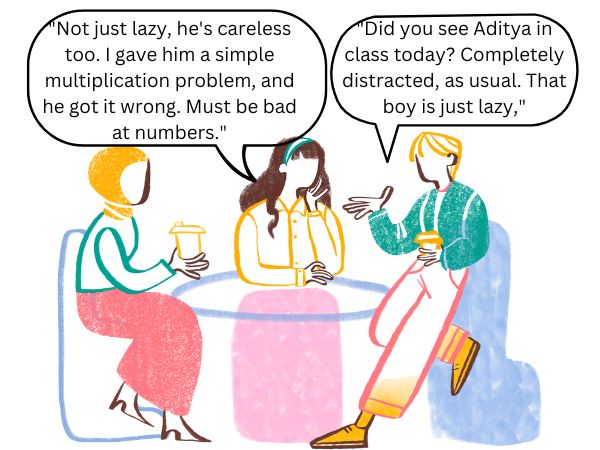
“Did you see Aditya in class today? Completely distracted, as usual. That boy is just lazy,” she remarked.
Mr. Sharma, the math teacher, nodded. “Not just lazy, he’s careless too. I gave him a simple multiplication problem, and he got it wrong. Must be bad at numbers.”
Mrs. Kapoor, the science teacher, chuckled. “And he’s always with Rohan and Sameer. That whole group is full of troublemakers.”
One by one, the labels stuck: lazy, careless, troublemaker. As the days passed, the way teachers viewed Aditya and his friends changed. Every mistake became proof of their “flaws,” and soon, the students felt it too. Aditya hesitated to answer questions in class. Rohan stopped trying in math. Sameer became defensive, convinced that no matter what he did, teachers would always judge him.
Then, a shift happened. The school enrolled in the Pipaltree Teacher Training Program, aimed at reshaping how teachers approached student development.
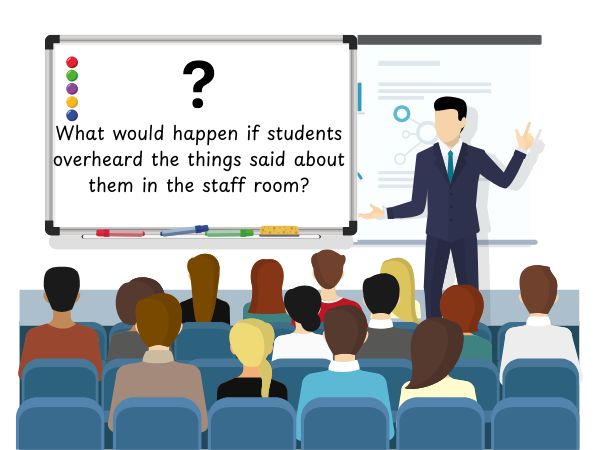
During a session on bias in education, the trainers asked a simple question:
“What would happen if students overheard the things said about them in the staff room?”
The silence was deafening. The teachers looked at each other, uncomfortable.
The trainers introduced them to positive reinforcement techniques and the growth mindset—the idea that intelligence and abilities could improve with effort. They encouraged teachers to reflect on how labeling students limited their potential.
Mrs. Nair found herself thinking about Aditya. Was he really lazy, or was something else going on? She decided to talk to him.
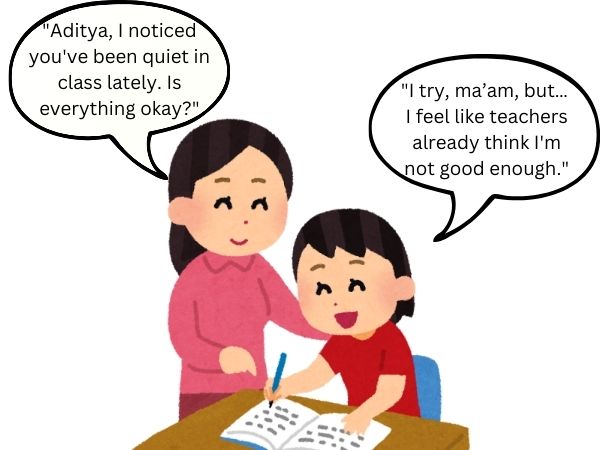
“Aditya, I noticed you’ve been quiet in class lately. Is everything okay?”
Aditya hesitated before whispering, “I try, ma’am, but… I feel like teachers already think I’m not good enough.”
That single moment shattered her assumptions. She learned that Aditya loved stories and had an incredible imagination, but he struggled with structured writing. With encouragement, he started working on storytelling exercises.
Meanwhile, Mr. Sharma, after revisiting his approach, discovered Rohan’s struggles with math were due to anxiety, not lack of ability. With a bit of guidance, Rohan started improving.
A few months later, the school saw a transformation. The students who were once labeled “troublemakers” started participating more. The teachers no longer gossiped about students in the staff room; instead, they discussed ways to help them grow.
The ripple effect was clear—when teachers changed the way they spoke about students, the way students saw themselves changed too.
And it all started with a simple lesson from Pipaltree: See beyond the label.
Want to transform your school too? Bring the power of new-age teaching & learning.
Contact us to revolutionize your school’s teaching approach today!
In service since: 2010.